


Why Decentralized Logistics Win in Civil Infrastructure Failures
The first 72 hours after a major disaster expose the weakness of systems designed around uninterrupted access. Roads become impassable, bridges close, fuel supplies are constrained, electricity fails, and communications degrade at the same time that demand for water, food, medication, and information rises sharply. Institutional response may be mobilizing, but mobilization is not the same as delivery. A truck cannot reach a neighborhood when the final road is flooded, and a centralized distribution center cannot serve residents who cannot safely travel to it.
This is where the value of mutual aid must be understood without moralizing it. Mutual aid is not merely an appeal for neighbors to be generous. Properly organized, it is a fault-tolerant distribution architecture. Neighborhood supply pods create small inventories, multiple access points, and local decision capacity. They absorb disruption in the same way that a well-designed network absorbs the failure of an individual component. The objective is not to replace government response or shift public responsibility onto residents. It is to protect the survival supply chain until formal responders can restore access, power, and replenishment.
The Anatomy of an Autonomous Supply Pod
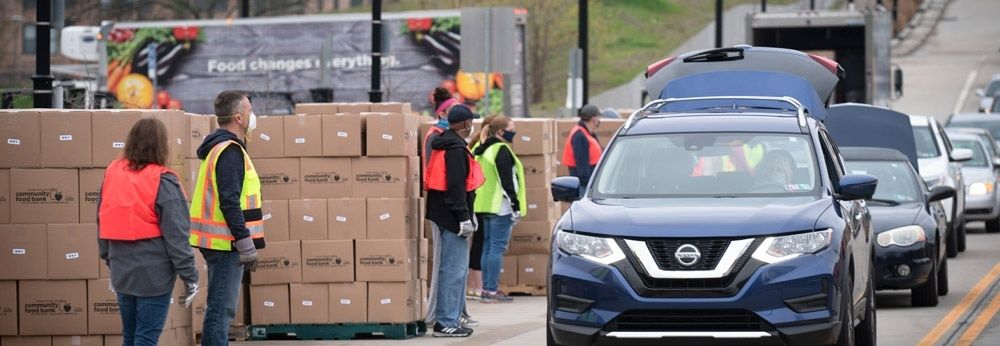
A supply pod is a deliberately selected neighborhood node that can receive, store, track, and distribute essential goods with limited dependence on the grid. It might occupy a community room, faith-based facility, school storage area, apartment complex utility space, or another location chosen through a documented agreement. The site should be above known flood levels where possible, accessible from more than one approach, and protected from heat, moisture, pests, and unauthorized entry. Weatherproof containers, shelving that keeps supplies off the floor, tamper-evident seals, fire protection, and a basic lighting plan are practical safeguards.
Security should reduce risk without turning the pod into a fortress or a high-profile target. Access can be controlled through a small authorized team, a key custodian system, and a written opening procedure. Power backups should be proportionate to the mission. Battery lanterns, rechargeable power stations, solar chargers, and hand-crank radios may be more useful than a complex generator that requires fuel, maintenance, ventilation, and secure storage. The pod should also hold printed maps, contact lists, forms, markers, tape, gloves, first-aid materials, and tools for moving stock.
Inventory should be organized by turnover rate and operational importance rather than by convenience. Fast-moving goods require frequent inspection and replenishment, while durable reserve items can remain sealed until a defined trigger is reached. A practical tiering model looks like this:
- Hydration: bottled or safely stored water, purification supplies, collapsible containers, and oral rehydration materials.
- Calorie density: shelf-stable foods that require little or no cooking, with attention to allergies, infant needs, and cultural preferences.
- Hygiene: soap, menstrual products, diapers, waste bags, disinfectant, gloves, and basic personal-care items.
- Communications: battery radios, charging equipment, paper forms, signage, whistles, and printed emergency contacts.
Micro-intake protocols prevent a sudden donation surge from becoming a second disaster. Every incoming shipment should have a receiving point, a count, a condition check, a source record, and a storage assignment. One person should not simultaneously unload vehicles, make allocation decisions, and answer public questions. Structured neighborhood nodes mirror institutional response modules, a principle reflected in the disaster logistics literature. The leverage comes from separating intake, inventory control, and dispensing before pressure arrives.
Centralized Hubs Versus Distributed Nodes
Centralized hubs are efficient when roads, communications, staffing, and power are working. They concentrate expertise and make large-scale inventory visible. Their weakness is concentration risk. If one warehouse floods, one bridge closes, one database fails, or one dispensing site becomes inaccessible, a large portion of the response can stall at once. The problem is not centralization itself. The problem is allowing a single location or route to become the only viable path to assistance.
Distributed nodes trade some economies of scale for speed, redundancy, and proximity. They cannot hold every item or replace specialized medical logistics, but they can shorten the final distance between supplies and residents. After Hurricane Helene, North Carolina”s official after-action review documented widespread flooding, power failures, communications blackout, infrastructure damage, and serious logistics and resource-allocation challenges. Its recommendations included stronger communications, improved data systems, and strategic pre-positioning. Local pods support that strategy by creating pre-positioned buffers rather than waiting for every item to travel through a damaged regional network.
| Operational factor | Centralized hub | Distributed node |
|---|---|---|
| Deployment speed | Efficient once fully staffed and accessible | Can open quickly with a trained local team |
| Transit risk | Dependent on major routes and transfer points | Uses shorter, more adaptable local movements |
| Resource visibility | High aggregate visibility through formal systems | Detailed local visibility, with a need for shared reporting |
| Failure impact | One closure can affect a large service area | Failure is contained if neighboring nodes exist |
| Flood and route disruption | May be isolated from affected neighborhoods | Can place caches on multiple sides of likely barriers |
The correct design is not centralized versus distributed as an either-or choice. Regional authorities need hubs for bulk purchasing, specialist supplies, and replenishment. Neighborhoods need nodes for last-mile access and local intelligence. The strategic move is to connect both layers while ensuring that a pod can operate for a defined period if the connection disappears.
Operating Without Power or Connectivity
Assume that digital systems will be unavailable at the worst possible moment. A pod should therefore maintain an analog operating layer that is simple enough to use under stress. A paper ledger can record opening time, stock on hand, receipts, distributions, spoilage, and replenishment requests. A dry-erase matrix can display current inventory by category, the next planned distribution period, and unresolved priority needs. These records should use consistent units, such as cases, bottles, kits, or individual portions, so different volunteers do not create incompatible counts.
Accountability does not require excessive bureaucracy. It requires a visible trail. Each distribution period should identify who opened the site, what was issued, and what remains. Sensitive information should not be displayed publicly. Names, medical details, and household vulnerabilities belong in controlled records, while public boards can show only general availability and operating instructions.
When mobile networks fail, communication becomes a routing problem. Establish fixed check-in times and physical message points rather than relying on continuous contact. Runners can move between nearby pods, but they need safe routes, identification, and a clear rule that no message is worth exposing someone to avoidable danger. Where available, licensed radio operators, community radio, or local mesh systems can relay status reports. The aim is not perfect information. It is enough reliable information to make the next decision.
- Assign a site lead: This person controls opening, safety decisions, and escalation.
- Assign an inventory lead: This person receives, counts, stores, and reports supplies.
- Assign a distribution lead: This person manages queues, rationing, and access flow.
- Assign a communications lead: This person maintains the ledger, message routes, and scheduled updates.
- Assign a safety lead: This person monitors hazards, crowd pressure, weather, and the need to pause operations.
These roles are intentionally narrow. Volunteers should know who has authority to make each type of decision, when to escalate, and what the pod is not authorized to do. Adopting low-tech organizational frameworks aligned with basic emergency protocols, such as the FEMA CERT introduction, can improve coordination. The course provides an orientation to CERT roles, responsibilities, volunteer coordination, and integration with formal emergency response, but it does not replace locally required classroom training.
Managing Risk and Contraband Scarcity
Scarcity creates friction when people cannot predict when help will arrive or whether supplies will last. A clear rationing cadence reduces both anxiety and crowd pressure. Publish opening windows, define quantities before distribution begins, and use a queue or appointment method suited to the neighborhood. If stock is limited, state the constraint plainly and prioritize life-sustaining needs without creating a public ranking of who is more deserving. Equitable distribution requires attention to residents who may be unable to stand in line, lack transportation, speak a different language, or depend on caregivers.
Some supplies require tighter controls than ordinary food and hygiene goods. Prescription medications should be handled only through lawful, qualified channels and documented custody procedures. Fuel creates fire, storage, and theft hazards, so neighborhood pods should not improvise bulk fuel operations. Cash reserves should be minimized, secured, and governed by dual authorization. High-value goods should be kept out of public sight, while distribution records should identify quantities and responsible custodians.
- Use low-profile signage that identifies service availability without advertising valuable stock.
- Separate public waiting areas from storage and receiving areas.
- Use two-person checks for sensitive inventory and end-of-shift counts.
- Rotate distribution points or delivery methods when a fixed location becomes unsafe.
- Coordinate with local authorities and established community organizations rather than creating an isolated parallel system.
Mutual aid is strongest when it expands access rather than reproducing the exclusions of formal systems. Community-centered emergency work should avoid “deserving victim” tests and recognize that historical inequality shapes who can reach assistance first. At the same time, residents should not be left to carry the full burden of disaster response. Government agencies, nonprofits, and neighborhood operators need defined handoffs, shared expectations, and replenishment commitments. The operating principle is disciplined solidarity: protect the vulnerable, control scarce resources, and preserve legitimacy through transparent decisions.
Architecting Last Mile Resilience Before the Crisis Hits
Neighborhood supply pods are not emergency improvisations. They are modest infrastructure investments that buy time when larger systems are delayed. Their value lies in redundancy, proximity, and decision capacity. A pod does not need to solve the entire disaster. It needs to keep a neighborhood supplied long enough for roads to reopen, communications to stabilize, and formal logistics to reconnect. That is a narrower mission, but it is measurable and operationally realistic.
The immediate next step is to map the block before a crisis. Identify elevated and accessible sites, alternate routes, residents with mobility or medical needs, local vehicles, storage capacity, bilingual volunteers, trained radio operators, and organizations that can provide space or replenishment. Define a minimum stock level, a trigger for opening, a distribution cadence, and a walk-away point for unsafe operations. Then run a tabletop exercise that removes power, roads, phones, and half the volunteers from the plan. Any process that collapses under that scenario needs redesign.
The strategic shift is from passive victimhood to autonomous civic logistics, without pretending that communities can replace public institutions. Residents become capable operators of the last mile, while agencies gain reliable local partners and better visibility into conditions on the ground. Cut through the noise, name the dependencies, protect the downside, and build enough distributed capacity that one failed road or server cannot decide who receives life-sustaining assistance.